



Why are subscription boxes still growing?
People did not stop loving surprises. They just got pickier. Boxes that win today deliver two things: strong product curation and predictable convenience.
SaaS closes the gap between taste and timing. You can track preferences, forecast demand, and deliver on schedule. When the experience is consistent, renewals follow.
The macro tailwinds help. DTC brands want repeat revenue. Creators want a steady income. Retailers want community, not just carts. Subscription makes all three happen in one motion.
Jump to:
What business model actually works for a subscription box?
Keep the math simple and honest.
- Contribution margin per box = Price minus product cost minus packaging and shipping
- Payback window = CAC divided by contribution margin
- LTV = AOV times number of cycles times gross margin
You do not need a perfect margin in month one. You need a clear path to pay back acquisition within two to three cycles. SaaS helps you see this in real time. Set alerts when payback slips. Trigger bundle offers if the margin dips below the target.
Example: If your box sells for 40, COGS and shipping are 22, and CAC is 35, you need two cycles to pay back. If your average member stays five cycles, you have three cycles of profit to fund growth.
Which metrics matter beyond MRR?
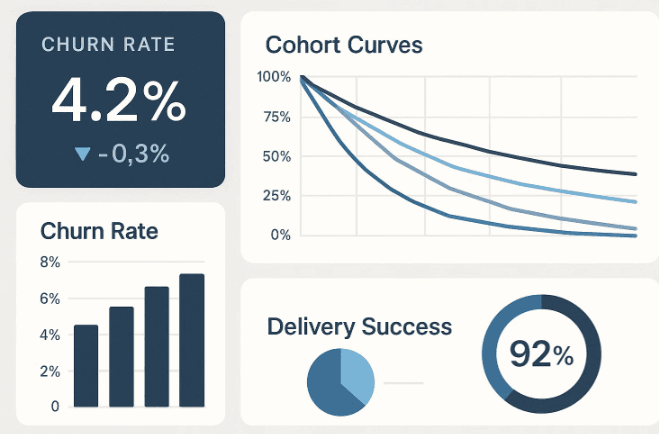
MRR is the scoreboard, not the strategy. Watch the small levers that move it.
- Activation rate: first delivery received on time
- First to second cycle retention: the truest early signal
- Skips and pauses: intent to churn in slow motion
- Delivery success rate: failed deliveries erode trust
- Refund percentage: often a packaging or sizing issue
Use SaaS to pipe these into one screen. Create a weekly ritual around the numbers, not just the revenue.
What does a lean SaaS stack look like on day one?
Here is a quick map you can start with. Swap tool names as you like. The roles stay the same.
| Layer | Job to be done | Starter pick | When to upgrade |
|---|---|---|---|
| Storefront | Take orders and manage product variants | Charge cards, manage renewals, and dunning | High SKU complexity or headless needs |
| Billing | Advanced proration, trials, and add-ons | Native recurring billing plugin | Advanced proration, trials, add-ons |
| CRM | Track members, preferences, support | Lightweight CRM or helpdesk | Multi-brand, SLA, custom objects |
| Marketing | Email, SMS, referral, lifecycle | Automation tool with segments | Journey orchestration and CDP |
| Fulfillment | Pick, pack, ship, returns | 3PL dashboard or WMS lite | Multiple warehouses and SLAs |
| Analytics | Cohorts, LTV, CAC payback | BI layer on top of events | Attribution and multi-touch modeling |
Keep the stack boring. Most boxes fail from messy operations, not missing features.
How do I personalize the box without blowing up operations?
Start with light layers of choice. Think tags, not full custom builds.
- Collect two or three preference signals at checkout.
- Keep product families small with clear swaps.
- Use rules in your CRM to map tags to SKUs.
- Let members preview and swap before the cutoff.
SaaS turns preference tags into pick lists. Your warehouse sees a clear label. Your member feels like it was handpicked. That is enough to lift retention without chaos.
Can I run a trial or intro offer without hurting margin?
Yes, if you model it. Make the trial a funnel tool, not a profit center.
- Lower price on box one, standard price after.
- Set a minimum of two cycles for the offer.
- Cap product cost on trial boxes with simpler curation.
Automate guardrails. Billing software should flip pricing on cycle two. CRM should trigger an education sequence after box one that sets expectations for the regular experience.
What is the cleanest way to handle billing, proration, and add-ons?
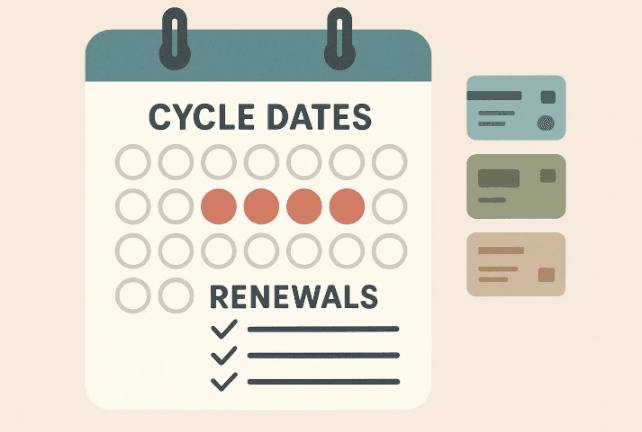
Keep your catalog simple. Offer monthly and quarterly at most. Put add-ons inside each cycle, not as separate products.
Billing rules to set from day one:
- Same renewal date for every member in a plan.
- Prorate only when you move a member mid-cycle for service reasons.
- Run dunning emails and SMS with clear payment links.
- Limit the number of card retries to avoid fees.
SaaS will do the heavy lifting if you standardize the rules. Your support team will thank you.
How do I acquire members without a big brand?
You do not need billboards. You need proof. People trust what other people open.
- Push for unboxing UGC in the first week.
- Give credit or loyalty points for public posts and reviews.
- Run referral with a simple give 10, get 10 structure.
Paid channels still work, but let UGC do the heavy lifting. Use your marketing automation to send a camera prompt with a simple script and a deadline. Make it easy to say yes.
Example: A beauty box ran a Free Brush for an unboxing post in the first seven days. UGC volume tripled. CAC fell by 18 percent over eight weeks.
Related Guide: https://www.youtube.com/shorts/VyGUh5WExGU
What should a lifecycle map look like in practice?
Think in cycles, not days. Every member moves through the same beats.
- Sign up and welcome. Set delivery windows and expectations.
- Pre-renewal nudge. Remind me about swaps or add-ons.
- Shipping update. Track link and expected date.
- Unboxing moment. Encourage UGC and review.
- Renewal confirmation. Celebrate streaks and badges.
Automate the basics with email and SMS. Personalize with tags. Over time, your best content will be the one members actually open after delivery.
How do I reduce churn without compromising my business?
Treat churn like a conversation, not a cliff.
- Offer pause options before cancel.
- Ask for one simple reason and branch the path.
- Tie offers to reasons. Too much product gets a skip flow. Price gets a lighter pack. Preference mismatch gets a swap kit.
- Track save rates by template, not just offers.
SaaS makes dynamic flows easy. The goal is not to block exits. It is to fix the friction that made leaving feel easier than staying.
What are the top fulfillment pitfalls that software can prevent?
Three mistakes hit boxes hard.
- Cutoff confusion. Members buy after the cutoff and expect immediate shipping. Fix it with clear timers and date logic on the PDP.
- Variant mis-picks. Personalization tags do not make it to the floor. Fix it with scannable bin locations and barcoded pick lists.
- Damaged packaging. The box arrives scuffed and kills the unboxing moment. Fix it with QC checklists in the WMS and a photo on pack out.
Every one of these is solvable with your stack. Make it visible. Audit weekly.
Can I forecast demand without an analyst?
Yes. You only need three inputs for a workable forecast.
- Starting active members
- Expected churn by cycle
- Planned new orders and trial conversions
Layer seasonality later. Most boxes are lumpy by design. SaaS can auto-generate purchase orders based on thresholds, then alert you when stock falls under a safe level.
How do I prove unit economics fast?
Put numbers on one page and check them weekly.
- CAC per channel
- Contribution margin per cycle
- Payback period
- Cohort retention at cycle 2 and 4
- Refund and support tickets per 100 orders
If CAC climbs and payback slips past three cycles, pull spend. If cycle 2 retention dips, fix product curation and delivery timing first.
What does a simple 90-day launch plan look like?
Month 1: Finalize offer, build stack, run prelaunch list with waitlist incentive.
Month 2: Launch to list, small paid test, partner with two micro creators.
Month 3: Add referral, tighten lifecycle flows, move to a 3PL if packs exceed your kitchen table.
Keep the plan short. Shipping on time is your best marketing.
Example: a tea subscription that doubled cycle 2 retention
A tea brand launched with one plan and three preference tags. Light, bold, decaf.
- Pain: too many members churned after the sampler.
- Move: added a pre-renewal swap. Members could choose a featured origin or stay with their tag.
- Result: cycle 2 retention rose from 62 percent to 74 percent in six weeks. Refunds fell by 20 percent. CAC stayed flat because UGC volume went up with the featured origin story.
Nothing exotic. Just a clear choice at the right moment, delivered through the stack.
How should I price without racing to the bottom?
Anchor on value, not on pennies. Three tips that hold up:
- Price in round numbers and include shipping in the headline price if you can.
- Offer quarterly at a small discount with a free insert.
- Keep add-ons clear and fun. Small surprises that are easy to say yes to.
Run price tests by cohort, not by sitewide flip. Your billing tool should segment renewals so you learn without risking the whole base.
What about taxes, duties, and global shipping headaches?
Start domestic unless your category is strongly global. If you ship cross-border, use carriers that automate duties and taxes. Place clear messages at checkout about delivery windows. Track the number of customs holds and treat it like any other operational metric.
SaaS will not remove customs. It will give you signals early. That alone saves headaches.
Where does AI actually help right now?
Use it to draft, tag, and predict. Do not let it replace your taste.
- Draft product copy with consistent voice.
- Tag support tickets to reasons at scale.
- Predict skip or churn risk from engagement data.
- Generate UGC prompts that feel like a friend, not a brand.
AI works best when wrapped in rules. Your team still chooses the story.
Quick answers to common subscription questions
How many SKUs do I need to start?
Two core products and one add-on are enough. More choice adds cost and confusion.
How fast should I ship after renewal?
Three to five business days is a sweet spot. Faster is great, but consistency beats speed.
How do I handle out-of-stock items?
Swap to a preapproved fallback with similar value. Notify before shipping, not after.
What is a good refund policy?
Clear, fair, and visible before checkout. Most brands settle on a limited window tied to damage or defects.
Final thoughts
Subscription works when it feels personal and predictable. SaaS makes that repeatable. Start with a lean stack, measure what matters, and fix the small frictions fast. Do that for a few cycles, and your box becomes a habit people look forward to, not just a package on the porch.