


You've probably felt it before. You launch a LinkedIn campaign, watch the impressions tick up, and then wait for the pipeline that never really shows up. It's frustrating, especially when the budget isn't small.
The real reason usually isn't your offer or your creative. It's the algorithm quietly deciding who sees your ad, how often, and at what cost. Once you get how that works, your B2B SaaS marketing starts to feel a lot less like guesswork.
Let's walk through it.
Table of Contents:
Why Do Your LinkedIn Ads Feel Invisible?
You're not being paranoid. LinkedIn really is holding your ad back if it doesn't hit certain markers.
The platform isn't trying to help your ad go viral. It's trying to keep users reading things that feel useful to their job. If your ad doesn't fit that vibe, delivery slows down, and your costs climb.
More budget rarely fixes it. The algorithm is telling you something about fit, not spend.
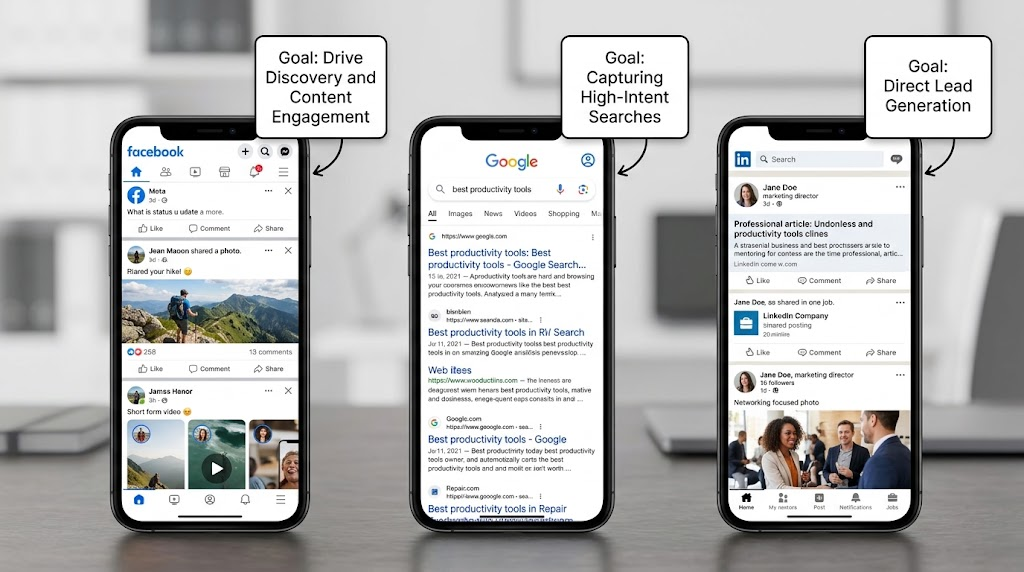
What Makes LinkedIn Different From Meta or Google?
Meta wants attention. Google wants intent. LinkedIn wants relevance to your work.
That's a small shift on paper but a huge one in practice. It means the tactics you use on Facebook or Search will almost always underperform if you copy-paste them into LinkedIn Ads.
You have to write for a professional feed, not a scroll feed.
What Signals Does LinkedIn Use to Rank Your Ad?
There are three big ones. Every ad you run gets scored against them, whether you know it or not.
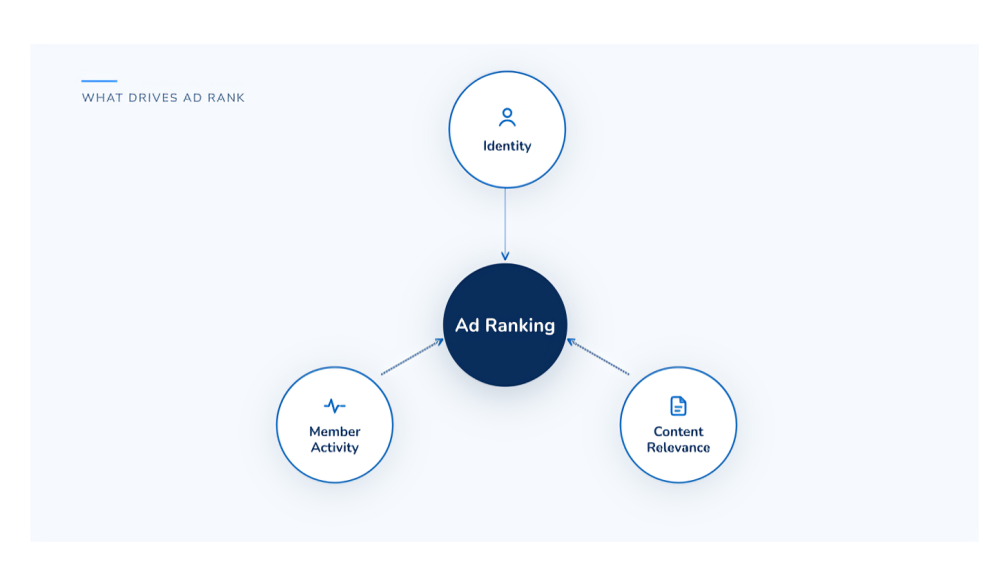
If your ad scores well across all three, delivery gets cheaper and reach expands. Score poorly, and the auction quietly punishes you.
Why Does "Identity" Change Who Sees Your Ad?
LinkedIn prefers to show your ad to people who already have some connection to your brand. Employees, followers, people who engaged with a past post, or those in your network.
Colder audiences aren't off limits. They just cost more. That's why running a small nurture campaign to your warm audience alongside a broader push almost always improves overall numbers.
Why Is "Content Relevance" the One Most Marketers Ignore?
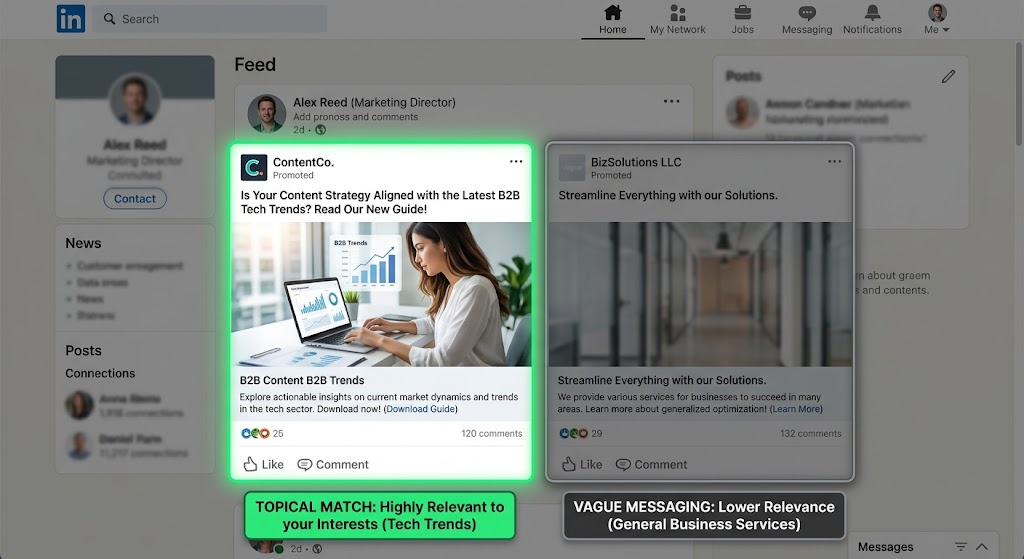
Because it's easy to miss, marketers focus on targeting filters and forget the ad itself has to match the topics their audience already cares about.
If a director of RevOps mostly engages with content about pipeline reporting, your ad about "scalable enterprise solutions" won't land. Sharp topic match beats broad claims every single time.
How Does "Member Activity" Affect Your Cost?
Active users are cheaper to reach. It sounds backward, but it's true.
Members who comment, share, and click regularly send the algorithm more data. That data helps LinkedIn place your ad in front of them with less guesswork. Fewer wasted impressions, lower CPM.
Passive users are still valuable; they just cost more to influence.
Why Is Engagement More Important Than Reach?
Reach is the metric you brag about. Engagement is the metric that actually lowers your costs.
When people react to your ad, LinkedIn takes that as a green light to show it more. When they scroll past, delivery slows down. Simple as that.
What Kind of Engagement Actually Helps?
Not all engagement is equal. A comment from someone in your ICP is worth more than 20 likes from random profiles.
Even better, a comment that sparks a reply. That signals a real conversation, which is exactly what the algorithm wants to reward. Ask a real question in your ad. Share a stat that challenges a common belief. Give people a reason to actually type something.
Which Ad Format Should You Actually Use?
Every format behaves a little differently inside the algorithm. Pick the wrong one, and you're paying premium prices for weak results.
| Ad Format | Best Funnel Stage | What It's Good At |
|---|---|---|
| Sponsored Content | Awareness and consideration | Feels native, drives comments |
| Message Ads | Consideration | Personal, direct, inbox delivery |
| Dynamic Ads | Awareness | Uses profile data to personalize |
| Lead Gen Forms | Decision | Pre-fills fields, less friction |
| Document Ads | Consideration and decision | Perfect for ebooks and reports |
When Should You Pick Lead Gen Forms Over a Landing Page?
Anytime the goal is a fast conversion from a warm audience.
Lead gen forms keep users on LinkedIn, and the algorithm loves that. One cybersecurity SaaS we came across switched a whitepaper campaign from a link ad to a native document ad. Cost per download dropped by more than a third. Same audience, same creative, different format.
If your CTA is deeper (a demo call, a signup, a trial), a landing page still makes sense. Just be ready to pay a bit more for the click.
Is Your Targeting Too Narrow?
Probably, if your matched audience is under 20,000 people.
LinkedIn already filters by professional context. Stacking too many filters on top starves the auction, and costs jump fast. A tighter audience feels precise but almost always underperforms.
What's a Healthy Audience Size for a SaaS Campaign?
A useful baseline:
- Sponsored content: at least 50,000 people
- Message ads: at least 15,000 people
Use exclusion lists to keep out mismatches instead of cutting your seed audience too small. Let the platform pace itself, then narrow later based on data.
When Is the Best Time to Run Your LinkedIn Ads?
Weekdays, mid-morning to early afternoon. Tuesday through Thursday tends to be the strongest window for most B2B campaigns.
Monday is crowded with catch-up content. Friday drops off fast. Weekends barely move the needle for pipeline campaigns.
Should You Use Dayparting or Let It Run?
Depends on your budget. If you're working with limited spend, dayparting protects you from burning through it during low-intent hours.
If you're always-on and well-funded, let LinkedIn pace delivery. Just check in weekly to see which time windows are pulling the best engagement.
Why Do Outbound Links Hurt Your Reach?
Because LinkedIn wants you to stay on LinkedIn. That's the whole business model.
When your ad sends users off the platform, the algorithm doesn't love it. Delivery still happens, but the cost creeps up. It's a quiet tax on external clicks.
When Is It Still Worth Sending Traffic Off LinkedIn?
When the click actually matters. Demo requests, product tours, signup pages. Anything bottom of funnel where the whole point is getting them onto your site.
Just give people a strong reason inside the ad first. Preview the outcome. Show a chart. Share a stat. The more context you build before the click, the better it converts.
How Do You Write Ad Copy the Algorithm Rewards?
Write like a person. Not a brochure.
The first two lines carry everything, because that's all users see before "see more." Lead with a specific pain, a bold claim, or a real story. Skip the corporate opener.
What Actually Makes Ad Copy Feel Native?
Short paragraphs. Real voice. A specific point of view.
Try this test. If your ad could be pasted into your CEO's personal feed and no one would blink, it's on the right track. If it reads like it belongs on a billboard, rewrite it.
What Common Mistakes Drain Most SaaS Ad Budgets?
A handful of small ones tend to stack up:
- Daily budget too low for the auction to stabilize
- Testing too many variables at once
- Generic stock images that get scrolled past
- Same creative running for months - hello, ad fatigue
- No frequency cap, so people see the same ad six times a week
None of these will kill a campaign on their own. Together, they explain most of the "we tried LinkedIn Ads, and it didn't work" stories you hear.
How Often Should You Refresh Your Creative?
Every three to four weeks is a healthy cadence for active campaigns.
You don't have to reinvent it. Just swap the hook, the image, or the format. New signals keep the algorithm interested and stop your CPMs from drifting up quietly.
Wrapping Up
LinkedIn isn't a set-it-and-forget-it channel. It rewards teams that respect its logic and punishes the ones treating it like a billboard.
Your creative, your targeting, your format, even your posting time all feed into the same ranking system. Get those pieces working together and the platform stops feeling expensive.
If your current campaigns are underperforming, don't reach for more budget first. Reach for better fit. That's almost always the fix.