


If you only run ads and hope people buy on the first click, you are leaving money on the table.
Most people are not ready to buy the first time they see you. They need reminders, proof, and a little push at the right moment. That is where Paid Ads and Email Automation working together can quietly multiply your results.
Let’s walk through how to actually connect them in a practical, non-fancy way you can use right away.
Jump to:
What Happens If You Only Rely On Paid Ads?
When you only use Paid Ads, you usually see this pattern:
Clicks are fine, leads are few, and sales are random.
People click, browse for a minute, get distracted, and never come back. Without Email Automation, you have no way to keep talking to them after that first visit. Your ad budget is basically paying for strangers who forget you in an hour.
You might notice:
- High cost per lead
- Low conversion on cold traffic
- No clear way to follow up with people who showed some interest
Think of it as a leaky bucket. Ads keep pouring water in, but everything you pour out disappears if you are not capturing emails and nurturing those visitors.
Why Does Email Automation Make Paid Ads Perform Better?
Email Automation is what turns a one-time click into a relationship.
When someone clicks your ad and joins your list, you are no longer renting their attention. You own a direct line to their inbox. You can:
- Remind them of the problem they want to solve
- Share stories and proof
- Answer objections
- Send offers at the right time
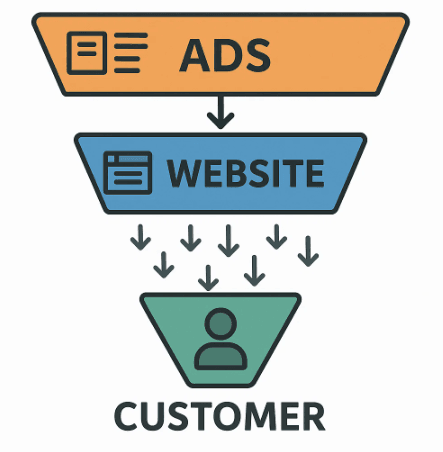
Now your Paid Ads are not forced to close the sale in one visit. The ad just needs to get the right people on your list. Email Automation can handle the education, nurturing, and follow-up.
Two powerful effects show up when you do this:
- Your cost per sale can go down, even if your cost per lead goes up.
- Every new campaign adds more leads to the same email engine, which compounds over time.
What Foundations Do You Need Before Connecting Ads And Emails?
Before you connect Paid Ads and Email Automation, you need a few basics in place. Otherwise, you create noise instead of a working system.
At a minimum, you should be clear on:
- Who you want to attract
Define one main audience. For example, “B2B SaaS founders with small marketing teams,” or “Local homeowners looking for AC repair.”
This helps you write both ads and emails that feel relevant to the same person. - One core offer or next step
Decide what you want people to do after your emails.
Book a call, start a trial, request a quote, or join a webinar.
Everything in the funnel should point here. - A simple lead magnet or value hook
People are more likely to share their email if they get something useful in return. Examples:- Short checklist
- Quick audit
- Template
- Free mini training
- Tracking and tagging are in place
Use UTM parameters and basic tagging so you know:- Which ad do they come from
- Which campaign or keyword drove the lead
This later helps you compare “leads from Ad A” versus “leads from Ad B” inside your email and CRM data.
How Do You Design A Simple Ad for an Email Funnel?
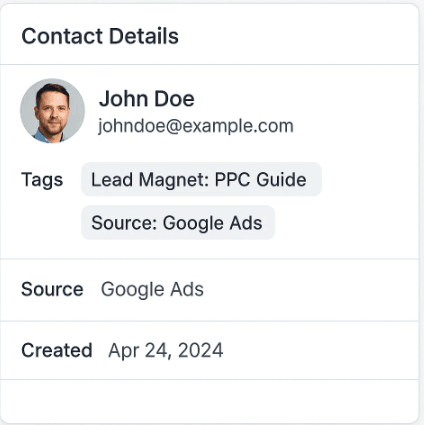
Let’s keep this practical. Here is a basic funnel you can launch even if you are not a marketing automation expert.
- Ad
- Hook: Focus on a clear problem and outcome.
- Example: “Struggling to turn clicks into customers? Get the 7-day follow-up sequence we use.”
- Landing Page
- Headline: Promise the specific value of your lead magnet.
- Short copy: Explain who it is for, what they get, and how it helps.
- Form: Only ask for what you actually need. Usually, name and email are enough.
- Thank You Page
- Confirm they are in.
- Tell them to check their inbox.
- Optionally, add a soft next step like “Book a call if you want help implementing this.”
- Email Automation Sequence
Example for a 5 email sequence:- Email 1: Deliver the lead magnet and set expectations.
- Email 2: Share a story and a quick win they can apply now.
- Email 3: Show a case or example that proves the method works.
- Email 4: Handle one big objection.
- Email 5: Invite them to the main offer or call.
Mini example:
A marketing agency runs Paid Ads, offering a “Google Ads Checkup Checklist.” The ad sends traffic to a landing page, people enter their email, and receive the checklist. Over the next week, the Email Automation sequence walks through common mistakes and ends with an invite to book a free strategy call. Many leads only book after email 3 or 4, not on the first click.
Related Article: https://www.adlabz.co/rethinking-paid-search-why-diversification-matters
Which Journeys Work Best For Paid Ads Traffic?
There are many ways to use automation, but a few flows tend to work especially well with Paid Ads.
Some examples:
- Lead magnet nurture sequence
The visitor gets a guide or checklist, then goes into a short sequence that educates them and invites them to the next step. - Trial or demo onboarding
Perfect for SaaS. When someone starts a trial from an ad, a sequence helps them reach “aha” moments quickly instead of getting lost in the product. - Quote or consultation follow-up
For services. If someone requests a quote, Email Automation can remind them, share proof, and answer common questions while sales works the pipeline. - Webinar or event reminder
If your ads send people to a live or automated webinar, a sequence can handle reminders before and follow up after the event.
Here is a simple table mapping common goals to how you might combine Paid Ads and Email Automation.
| Goal | Paid Ads Example | Email Automation Idea |
|---|---|---|
| Get more qualified leads | Short upsell sequence explaining a new feature or add-on | Reminder sequence plus replay follow-up |
| Improve trial activation | Ads to “Start Free Trial” page | Onboarding sequence with tips, feature highlights, and Q&A |
| Sell a high ticket offer | Ads to “Free Consultation” or “Apply Now” page | Objection handling, case studies, deadline reminders |
| Grow webinar attendance | Ads to webinar registration | Sell a high-ticket offer |
| Upsell existing customers | Ads shown to remarketing or customer lists | Short upsell sequence explaining a new feature or add on |
How Should You Segment And Personalize Based On Ad Clicks?
Not all leads are equal. Someone who clicked “pricing” intent keywords is very different from someone who clicked a top-of-funnel ad. Email Automation lets you speak to these people differently.
You can segment based on:
- The campaign or keyword that drove the click
- The ad group or audience they came from
- The lead magnet they requested
- Actions inside your emails or website later
Practical example:
Imagine two Paid Ads:
- “Get Our Free SaaS Ads Checklist”
- “Book A SaaS PPC Strategy Call”
Both collect emails, but the intent is not the same. You can:
- Tag leads from the checklist as “Top of funnel” and send a longer nurture sequence.
- Tag leads from the strategy call as “High intent” and send a shorter sequence with calendar links and more proof.
You do not need extreme personalization at the start. Even simple rules like “different sequence for lead magnet A vs lead magnet B” can improve conversion.
What Metrics Should You Track Across Paid Ads And Email Automation?
Looking only at click-through rate or cost per click hides the real story. When Paid Ads and Email Automation work together, you should track both channel-level and funnel-level numbers.
Key ad side metrics:
- Cost per click
- Lead conversion rate on the landing page
- Cost per lead
Key email and funnel metrics:
- Open rate of the first few emails
- Click rate on key calls to action
- Reply rate or booked calls
- Revenue per lead or per campaign over time
The real power comes when you connect these. For example:
- Ad A has a higher cost per lead than Ad B.
- But leads from Ad A open emails more, click more, and buy at a higher rate.
- Over 30 or 60 days, Ad A actually produces cheaper customers.
When you track at this level, you make smarter decisions and avoid pausing ads that look expensive on the surface but produce great customers after the email sequence does its work.
How Can You Use Automation To Support Sales And Customer Success?
The funnel does not end when someone fills a form. Email Automation can support your sales team and even your customer success team.
Some ideas:
- Sales handoff and reminders
When a qualified lead fills a form, automation can:- Notify the right salesperson
- Create tasks in the CRM
- Send the lead a confirmation email and maybe a short “what to expect” message
- Warm up before the call
Between booking and the actual meeting, a short sequence can:- Share a quick video explaining your process
- Send a case study relevant to their industry
- Ask a question that helps you qualify them
- Post-sale onboarding
Once someone becomes a customer, automation can:- Send onboarding steps
- Share tutorials
- Ask for feedback or NPS later
When this works well, Paid Ads bring in prospects, Email Automation warms them up, and the sales team spends more time with people who already understand your value.
What Mistakes Should You Avoid When Combining Ads And Email?
It is easy to overcomplicate things when you first connect Paid Ads and Email Automation. A few common mistakes:
- Trying to build a giant funnel on day one
Huge trees with dozens of branches look impressive but are hard to maintain. Start with one simple sequence that you can improve. - Writing emails that feel like ads
If every email is “buy now,” people tune out. Use your sequence to teach, share stories, and answer questions, as well as to sell. - Ignoring mobile experience
Many people will click ads and read emails on their phones. Make sure:- Landing pages are fast and simple
- Forms are easy to fill out
- Emails are readable on a small screen
- Not respecting consent and expectations
If someone signs up for a “weekly newsletter,” do not send them three sales emails a day. Be clear about what they will get and stick to it. - Never revisiting sequences
Set and forget is tempting. But once there is enough data, review subject lines, open rates, and click rates. Small edits can move the needle.
How Do You Get Started In A Low-Risk Way?
You do not need a huge tech stack or a complex strategy to start combining Paid Ads and Email Automation.
Here is a simple way to begin:
- Pick one main offer and one audience.
- Create one good lead magnet or value hook tied directly to that offer.
- Build a clean landing page and thank you page.
- Write a short sequence of 4 to 6 emails that:
- Deliver value
- Share one or two examples
- Invite people to the next step
- Run one Paid Ads campaign focused only on filling this funnel.
- Watch the numbers for at least a few weeks before making big changes.
Once this basic setup is working, you can:
- Add more sequences for different offers
- Segment by campaign or industry
- Test more advanced automation, like behavior-based triggers
The key idea is simple. Paid Ads buy you attention for a moment. Email Automation keeps that attention and turns it into trust, conversations, and revenue over time.
If you treat them as one system instead of separate channels, every click starts to matter more.