



Authenticity is not a buzzword. It is the feeling your customer gets when a message sounds like it came from a person who understands them. Marketing Automation is not the villain either. It is a set of tools that help you deliver the right message to the right person at the right time. The tension starts when speed replaces sincerity.
This honest take is for founders and marketers who want growth without sounding robotic. You will find short sections that answer real questions, one practical table, and a few examples. Paragraphs are brief. Jargon is kept in check.
Jump to:
What do customers mean when they say authentic?
People want two things. First, to feel seen. Second, to feel safe that you are not tricking them. Authenticity shows up as clear language, consistent tone, and honest intent. It also shows up when you admit limits, explain choices, and invite dialogue.
If your messages feel like they are shouting or hiding, customers call it inauthentic. If your messages feel like a conversation, they lean in.
Where does automation help and where does it hurt?
Automation shines when it removes friction and repeats helpful steps. It hurts when it avoids listening or fakes empathy. Use the table below to decide where it fits.
| Use case | Good automation outcome | Risk to authenticity | Safeguard that keeps it human |
|---|---|---|---|
| Lead capture routing | Fast handoff to the right rep | Cold, templated follow up | Add a personal intro line from the rep with context on why they reached out |
| Cap frequency and add a real opt-down to fewer emails | Timely tips tied to actions | Feature dump that ignores user intent | Trigger by behavior and keep one clear action per email |
| Nurture sequences | Educate with value in steps | Repeating offers that feel spammy | Fast handoff to a human with a name and a calendar link |
| Re-engagement | 24/7 answers for simple questions | Guilt or fear tactics | Offer a helpful resource and accept a no gracefully |
| 24/7 answers for simple questions | 24 or 7 answers for simple questions | Loops when issues are complex | Gentle check-in with a reason |
| Review requests | Convenient prompts after success moments | Desperate tone or bribery | Ask once, explain why it matters, and make it easy |
Are your workflows answering real questions or pushing scripts?
A simple test. Read your welcome email and ask if it answers the top question a new user has in the first seven seconds. If it does not, you have a script, not a solution.
Example:
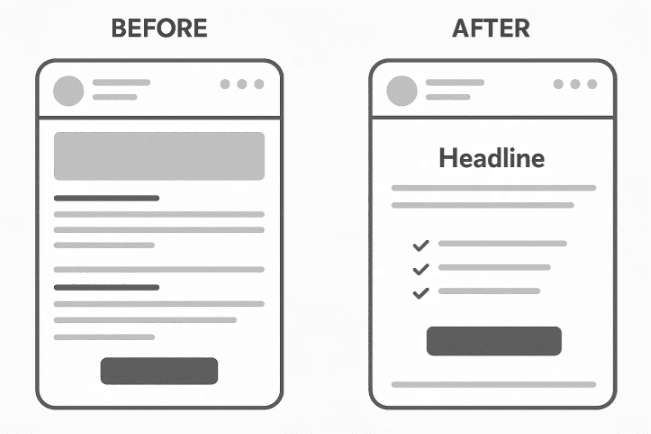
A project management app saw low activation from a three-email welcome series. Each email listed five features. They replaced it with one email that said, “Add your first task and invite one teammate. Here is a two-step guide.” Activation improved because the message solved the first real problem.
How do you keep a human voice in automated messages?
Start with a voice kit. It is a small file that has a few elements.
- A one-sentence brand voice statement
- Three do words and three do not words
- Five approved phrases that sound like you
- Five banned phrases that make you sound robotic
- Two short examples of a friendly greeting and a graceful sign-off
Write your sequences using the kit. Then apply a “read it out loud” test. If you feel silly reading it, your customer will feel cold reading it.
Can personalization at scale avoid sounding creepy?
Yes, if you follow three rules.
Use only the signals the user gives you on purpose.
Keep context fresh and forget what no longer helps.
Personalize for usefulness, not to show you have data.
Personalization is a tool to make the next step easier. It is not a party trick.
When should you let humans take the mic?
There are moments where your user needs care, not cadence.
Product outages
Pricing changes
Security notifications
Sensitive feedback
Big wins with a story behind them
For these cases, write from a person with a name, title, and contact path. Even if an automation schedules the message, the content should feel like a note from someone who owns the moment.
Full Guide: https://youtube.com/shorts/t_ijhnmoj5I?si=iGpuNx3V5s8hCqoz
What metrics show that you crossed the line?
Look beyond opens and clicks. Watch for the signals that point to trust.
Rising unsubscribe reasons that mention tone
Lower reply rates to plain text emails from reps
Spike in spam complaints after certain templates
Support tickets that quote confusing copy
Declining assisted conversions from nurture paths
If one message moves numbers but creates negative replies, it is not a win. Integrity is a metric.
What does a human-in-the-loop stack look like?
Think in three layers.
Signals
Content
Review
Signals capture the right context. Content translates signals into helpful messages. Review protects tone and timing. You can run this with lightweight tools.
Signals can come from product events, CRM fields, and user replies.
Content lives in a modular library with message blocks by job to be done.
Review happens with a weekly copy circle. One marketer and one non-marketer read the top messages out loud.
How do you design automation that invites conversation?
End every sequence with a soft call to reply. Use a monitored mailbox that your team actually reads. Add two lines that make replies easy.
“Hit reply with one problem you are stuck on.”
“If this is not useful, reply with stop, and I will reduce the frequency.”
Tag replies and bring insights back to the content library. Your best copy will be phrases your customers wrote first.
Mini case study: what changed when we rewrote a nurture path
A B2B SaaS offered a free trial. Signups received eight emails in two weeks. Open rates were fine. Activation lagged. The team made three changes.
They mapped the first three user jobs.
They cut the sequence to five emails.
They added one plain-text note from a rep on day two.
The plain text note was one paragraph. It asked what the user hoped to get done this week. It included a link to a two minute setup guide. Replies increased. Product usage improved. A few users booked short calls. Growth came from fewer, better messages.
How do you scale content without sounding the same everywhere?
Use content spines. A spine is a small outline with a promise, proof, and path. You write the spine once. Then you adapt it for each channel.
Promise is the outcome in the customer’s words.
Proof is a single fact, not a list.
Path is the next step.
Write each channel version fresh from the spine. Do not paste. Do not resize. Rewriting from the spine keeps the message human and native to the channel.
What governance stops bland automation?
Lightweight rules beat heavy policy.
Set a ceiling for how many emails any contact can get in a week.
Require a human sender for sensitive messages.
Run a monthly review of your top five automated emails.
Retire one template every month and replace it with a new one from recent feedback.
Keep a small panel of three customers who read key emails before big launches.
These habits keep your library fresh and your tone honest.
Does AI copy kill originality, or can it help you sound more like you?
AI can make you sound generic if you accept the first pass. It can also help you sound more like yourself if you feed it your voice kit and let it draft variations. The key is to ask for specific outcomes.
Ask it to shorten without losing meaning.
Ask it to simplify a sentence at a grade eight level.
Ask it to try three endings with different levels of energy.
Then read them out loud and choose the one that sounds like a person you know on your team.
Quick audit: Are your automations helping or hurting?
Full Guide: https://youtu.be/s4sl72De8M4?si=ZtNXNN-Kgj-ohFVe
Use this ten-minute check.
Subject lines
Do they promise a clear value in simple language
First 50 words
Do they answer a real question a user has right now
One action
Is there only one obvious next step
Timing
Is the message tied to behavior rather than a generic calendar
From address
Does a real person own the reply
Unsub and preference link
Is it clear and respectful
Data use
Is the personalization based on volunteered signals
Frequency
Is there a cap per contact per week
Tone
Does it sound calm, clear, and consistent with your voice kit
Learning loop
Do replies feed a content library with examples and phrases
Example library: two short messages that feel human
Activation nudge
Subject: Want help setting up your first dashboard
Body: You created your workspace yesterday. Nice start. Most teams get value once they add one data source and invite one teammate. If you want a two-minute guide, here it is. If you prefer a quick pointer, reply with the tool you use, and I will point you to the right step.
Re-engagement
Subject: Keep or close your trial
Body: We have not seen activity for a week. That is common. If the timing is off, I can pause emails. If you want to try again, I saved your last setup so you can pick up where you left off. Tell me what you hoped to measure, and I will send the shortest path.
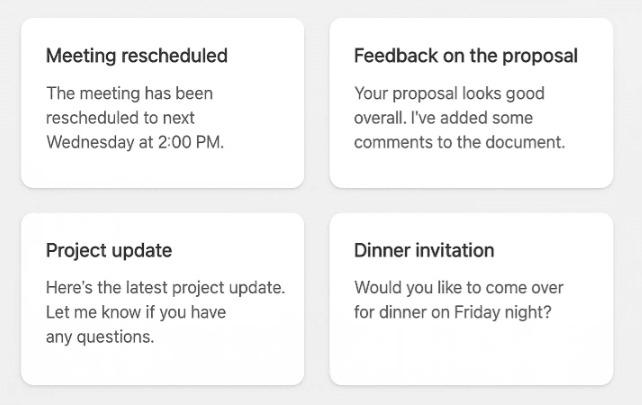
Table stakes vs trust builders
Another way to think about authenticity is to separate table stakes from trust builders.
Table stakes are basics like accurate names, working links, and correct timing.
Trust builders are choices that show care, like honest subject lines, opt downs, and real signatures.
Skip the basics, and nothing else matters. Nail the basics and then add one trust builder to each key message.
What should your first 30-day plan look like if you want authenticity at scale?
Week 1
Inventory every automated message. Tag each one as Keep, Fix, or Kill. Build or update your voice kit. Cap the weekly send limit.
Week 2
Rewrite the top three messages that touch the most contacts. Add reply prompts. Set up a daily reply triage with one owner.
Week 3
Connect one key product signal to one message that is currently sent on a timer. Trigger it by behavior. Remove two generic emails.
Week 4
Collect ten real customer phrases from replies and support. Swap them into your copy. Retire one template. Add one live sender note for a sensitive topic.
Common pitfalls to avoid
Chasing lift with shock tactics
Using fake urgency on every offer
Treating unsubscribe as a failure instead of a preference
Letting bots handle edge cases that need care
Copying a competitor’s tone that does not fit your audience
If a tactic makes you win this week but lose trust next month, it is not worth it.
Final take
Marketing Automation is not killing authenticity. Poor choices are. When automation supports the conversation, it feels like care at scale. When it replaces listening, it feels like noise.
Start small. Choose one high-impact message. Make it shorter. Tie it to a real moment. Invite a reply. Read the replies. Fold what you learn back into the next version.
Authenticity is not a style. It is a system of choices that respects your customer. Build that system, and your automation will help you grow with your voice intact.