


Choosing the right Subscription Model is one of the most important decisions for any B2B SaaS company.
It directly affects revenue predictability, customer acquisition, and long-term growth.
Many founders focus heavily on product features but underestimate how pricing structure influences adoption and retention. The reality is simple. Even a great product can struggle if the subscription model does not match how customers want to buy.
In this guide, we will explore seven practical Subscription Model options used by successful B2B SaaS companies. You will also learn when each model works best and how to choose the right approach for your business.
Jump to:
What Is a Subscription Model in B2B SaaS and Why Does It Matter?
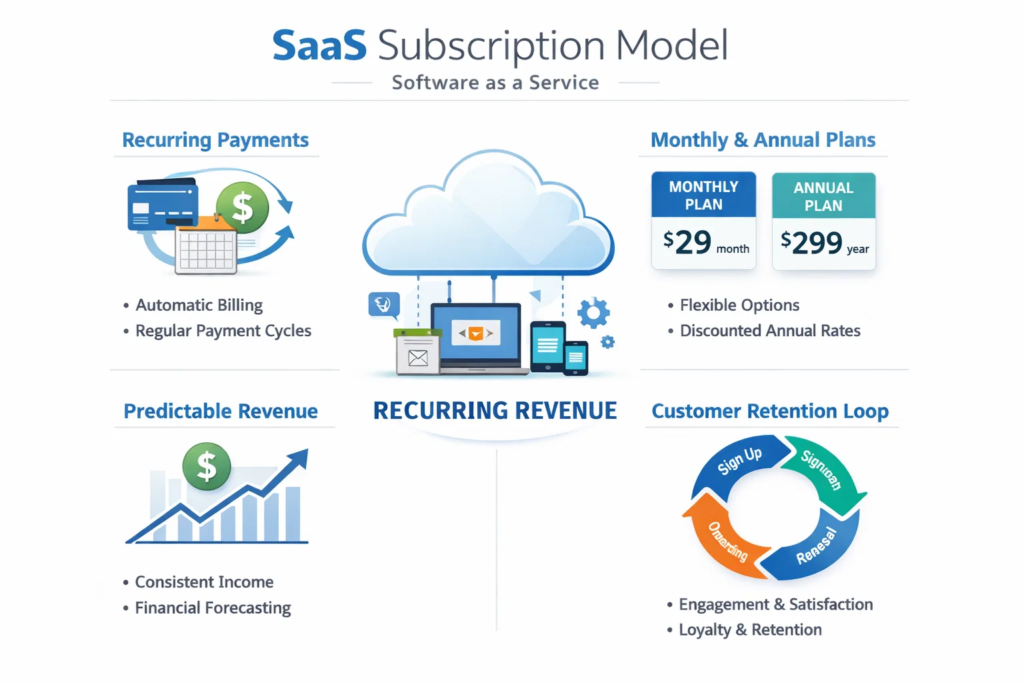
A Subscription Model allows customers to pay a recurring fee to access software instead of buying it once. Payments usually happen monthly or annually and give users continuous access to the platform.
This approach has become the foundation of modern B2B SaaS companies because it creates predictable revenue and encourages long-term relationships with customers.
Instead of relying on one-time sales, businesses generate recurring revenue that grows as customer adoption increases.
Typical benefits include:
• Predictable monthly recurring revenue
• Better customer retention opportunities
• Continuous product improvement cycles
For example, project management tools like ClickUp and communication tools like Slack rely on subscription models to grow revenue while continuously adding features.
However, not all subscription structures work for every product. The right model depends on your value metric.
Before choosing one, you need to understand how customers actually use your product.
Which SaaS Subscription Model Should B2B SaaS Companies Choose?
There is no universal subscription structure that works for every B2B SaaS company.
Different businesses use different models depending on:
• Product complexity
• Customer type
• Usage patterns
• Sales strategy
The table below gives a quick overview of the seven most common models.
| Subscription Model | Best For | Example Type |
|---|---|---|
| Freemium | Early stage products needing user growth | Design tools |
| Flat Rate | Simple products with one feature set | Small SaaS tools |
| Tiered Pricing | Products with multiple feature levels | CRM platforms |
| Per User | Collaboration software | Team tools |
| Usage Based | Infrastructure or API services | Cloud platforms |
| Hybrid | Complex SaaS ecosystems | Marketing platforms |
| Custom Enterprise | Large enterprise contracts | Enterprise SaaS |
Most successful B2B SaaS companies eventually combine multiple models to match different customer segments.
Now, let us break down each option and understand when it works best.
When Does the Freemium Subscription Model Work Best?
The freemium Subscription Model allows users to access a limited version of your product for free while charging for advanced features.
This approach focuses on product-led growth. Users experience value before paying.
Freemium works best when your product has strong network effects or viral adoption.
For example, design platforms and collaboration tools often rely on this strategy.
Example:
A document collaboration tool may allow
• Unlimited personal use for free
• Paid plans for team collaboration and security features
The main advantage is rapid user acquisition. However, conversion rates can sometimes be low if the free plan offers too much value.
The key is balancing accessibility and upgrade incentives.
Related Article: https://www.adlabz.co/5-saas-business-model-mistakes-startups-make
Is Flat Rate Pricing Too Simple for B2B SaaS?
The flat rate Subscription Model offers a single product with one price.
Customers pay the same amount regardless of usage or the number of users.
Example structure:
| Plan | Monthly Price | Features |
|---|---|---|
| Standard | $49 | All features included |
This model works well for early-stage B2B SaaS startups because it simplifies pricing decisions.
Customers understand the value instantly, and there is no confusion about pricing tiers.
However, flat pricing can limit revenue growth. High-value customers may pay the same amount as small teams.
That is why many SaaS companies start with flat pricing and later transition to more scalable models.
Why Is Tiered Pricing the Most Popular Subscription Model?
The tiered Subscription Model is the most common pricing strategy used in B2B SaaS.
In this model, companies create multiple plans with different feature sets and pricing levels.
Typical structure:
| Plan | Target Customer | Price |
|---|---|---|
| Starter | Small teams | $29 |
| Pro | Growing businesses | $79 |
| Enterprise | Large organizations | Custom |
Each tier adds value, including additional integrations, automation features, and security controls.
This model works because it naturally creates upgrade paths.
Customers start small and move to higher tiers as their needs grow.
Many CRM and marketing platforms rely on tiered pricing to scale revenue with customer growth.
How Does the Per-User Subscription Model Work?
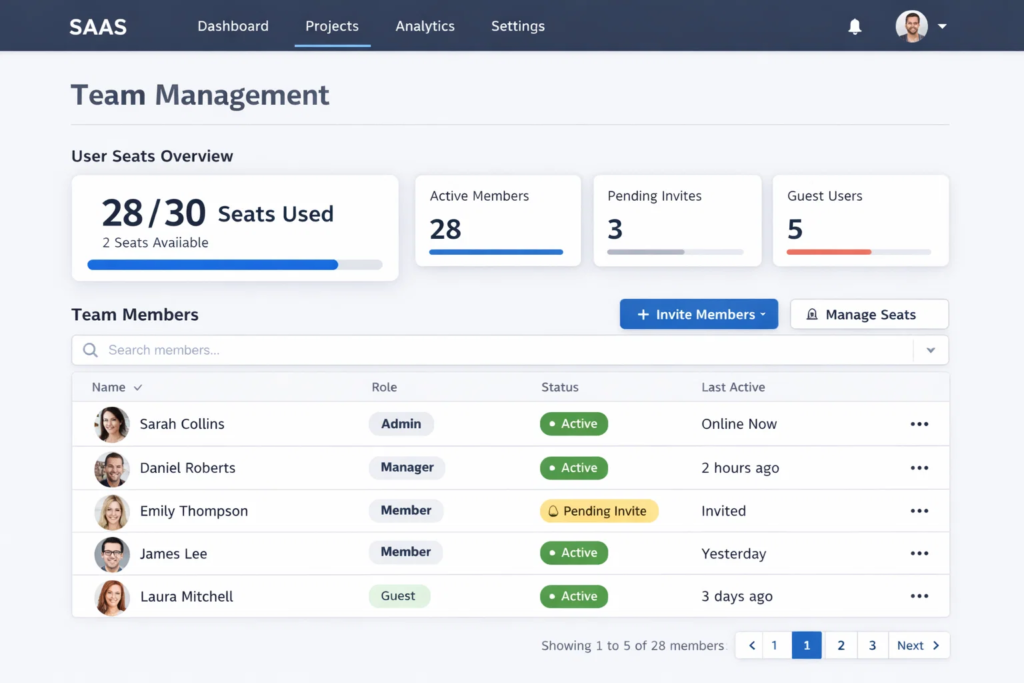
The per-user Subscription Model charges customers based on the number of people using the software.
It is widely used in collaboration software, productivity tools, and customer support platforms.
Example:
| Users | Monthly Cost |
|---|---|
| 5 users | $50 |
| 20 users | $200 |
| 100 users | $1000 |
This model is easy for customers to understand and allows revenue to scale as teams grow.
However, there is one drawback.
Some companies try to reduce costs by limiting user accounts or sharing logins. This can slow expansion if the pricing becomes too expensive.
Successful B2B SaaS products often combine per-user pricing with tiered features.
When Should SaaS Companies Use Usage-Based Pricing?
Usage-based pricing charges customers based on how much they actually use the software.
This is sometimes called pay-as-you-go pricing.
Common usage metrics include
• API requests
• data storage
• transactions processed
• messages sent
Cloud infrastructure platforms rely heavily on this model.
For example, a cloud API service may charge
| API Calls | Monthly Price |
|---|---|
| 10,000 | $10 |
| 100,000 | $80 |
| 1,000,000 | $500 |
Usage pricing aligns cost with value. Customers only pay for what they consume.
However, it requires clear billing transparency to avoid surprises.
Why Are Hybrid Subscription Models Becoming More Common?
Many modern B2B SaaS companies no longer rely on a single pricing structure.
Instead, they combine multiple subscription approaches.
This is called the hybrid Subscription Model.
Example combination:
• Base subscription plan
• Per user pricing
• Usage-based add-ons
A marketing automation platform might charge:
• Base platform fee
• Additional cost per user
• Extra charges for email volume
Hybrid pricing provides flexibility and allows businesses to capture more value from different customer segments.
Some large SaaS platforms even include freemium entry points alongside enterprise contracts.
When Should B2B SaaS Companies Use Custom Enterprise Pricing?
Enterprise customers often require custom pricing structures.
Instead of predefined plans, the SaaS provider negotiates contracts based on:
• number of users
• integrations required
• support level
• data volume
Example enterprise deal:
| Component | Pricing |
|---|---|
| Platform license | $25,000 per year |
| API usage | Variable |
| Dedicated support | Included |
Enterprise pricing works best for complex B2B SaaS products that serve large organizations.
It allows vendors to tailor pricing to the customer's scale and deliver higher contract values.
However, it requires a strong sales team and longer sales cycles.
How Should You Choose the Right SaaS Subscription Model?
Selecting the right Subscription Model is not just about pricing.
It is about aligning your product's value with how customers experience it.
Here are three practical questions every B2B SaaS founder should ask.
- What metric represents customer value?
Is it users, data processed, or features unlocked?
- How predictable is product usage?
Stable usage works well with fixed pricing. Variable usage works better with consumption models.
- What is your go-to market strategy?
Product-led growth favors freemium while enterprise sales often require custom pricing.
Most successful SaaS companies evolve their subscription strategy as they grow.
Early-stage startups often begin with simple pricing and gradually move toward hybrid models.
Final Thoughts
There is no perfect Subscription Model for every B2B SaaS company.
What matters is choosing a pricing structure that reflects the value your product delivers.
The seven models discussed in this guide provide a solid starting point:
• Freemium
• Flat rate
• Tiered pricing
• Per user pricing
• Usage-based pricing
• Hybrid pricing
• Custom enterprise pricing
The best strategy often combines several of these approaches.
As your product matures and customer needs evolve, your subscription structure should evolve as well.
A thoughtful pricing strategy can become one of the strongest growth levers for any B2B SaaS business.