



If you are getting traffic but not pipeline, it is rarely because your writing is “bad.”
Most of the time, the content is simply not doing its job. It attracts the wrong audience, explains the wrong problem, or asks for the wrong next step too early. Conversion-driven content needs to attract the right ICP, show how your product solves a real problem, and guide the reader to the next step in the buyer journey.
This guide will help you build B2B SaaS content that does those three things, without turning every post into a sales pitch.
Jump to:
Why Does My B2B SaaS Content Get Views But Not Conversions?
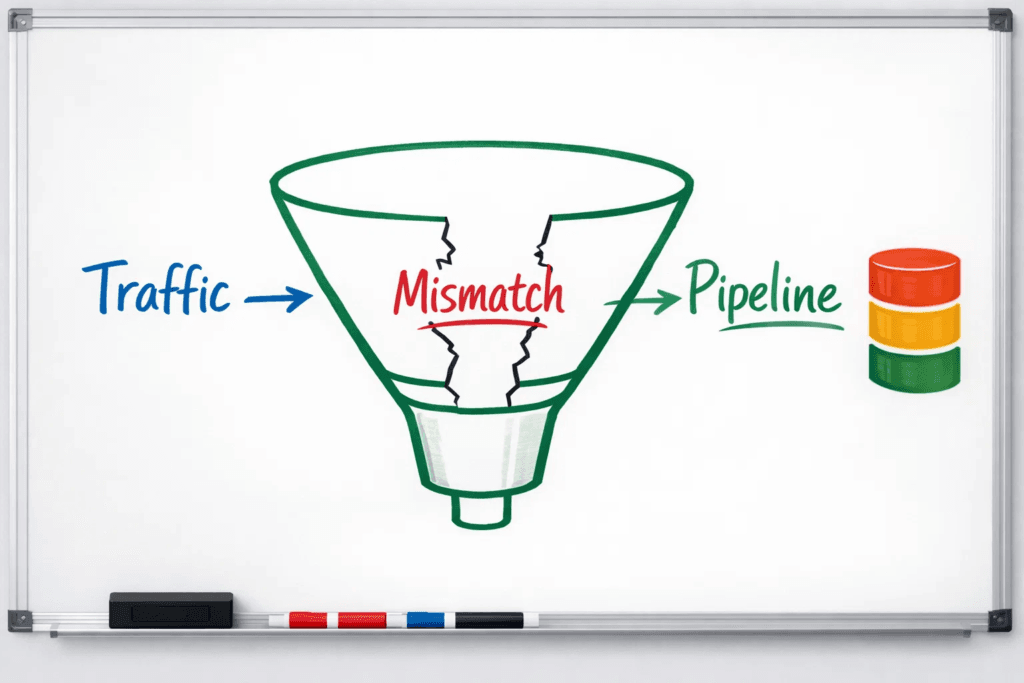
High traffic can be a trap.
If you prioritize volume keywords, you often pull in readers who will never buy, or who are too early to take action. Chasing traffic over commercial intent can bring the wrong people, or the right people at the wrong stage.
Here are the three most common reasons the content feels busy but revenue feels quiet:
- Your topics attract learners, not buyers. Students, job seekers, or hobbyists consume the content, love it, then leave.
- Your content solves a problem your product does not solve. Even if the reader fits your ICP, they do not connect the article to your product’s value.
- Your CTA does not match where the reader is. Asking for a demo on every post is a classic “too much, too soon” move.
The fix is not “add a stronger CTA.” The fix is aligning intent, narrative, and next step.
What Should I Write About If I Want Buyers, Not Just Readers?
Start with one question: What are people searching right before they shortlist a tool like yours?
Mapping converting keywords using what already drives conversions, plus PPC keyword performance, and competitor paid keywords.
That is a great shortcut because paid search data is basically a live feed of what converts.
Related Article: https://www.adlabz.co/11-best-saas-ppc-agencies-for-paid-ads-in-2025
Pick topic types that naturally convert
Some keyword patterns show up again and again for B2B SaaS buyers:
- Competitor comparisons (example: X vs Y)
- Alternatives (example: X alternatives)
- Best tools lists (especially “best for” an industry or role)
- How to solve a painful workflow (especially manual work your product replaces)
These topics work because the reader is already evaluating solutions, not just learning concepts.
A quick rule that keeps you honest
Before you greenlight a topic, write one sentence:
“If someone reads this and agrees, the next logical step is to consider our product.”
If that sentence feels forced, the topic is probably not conversion-friendly.
How Do I Make Sure I Attract The Right ICP?
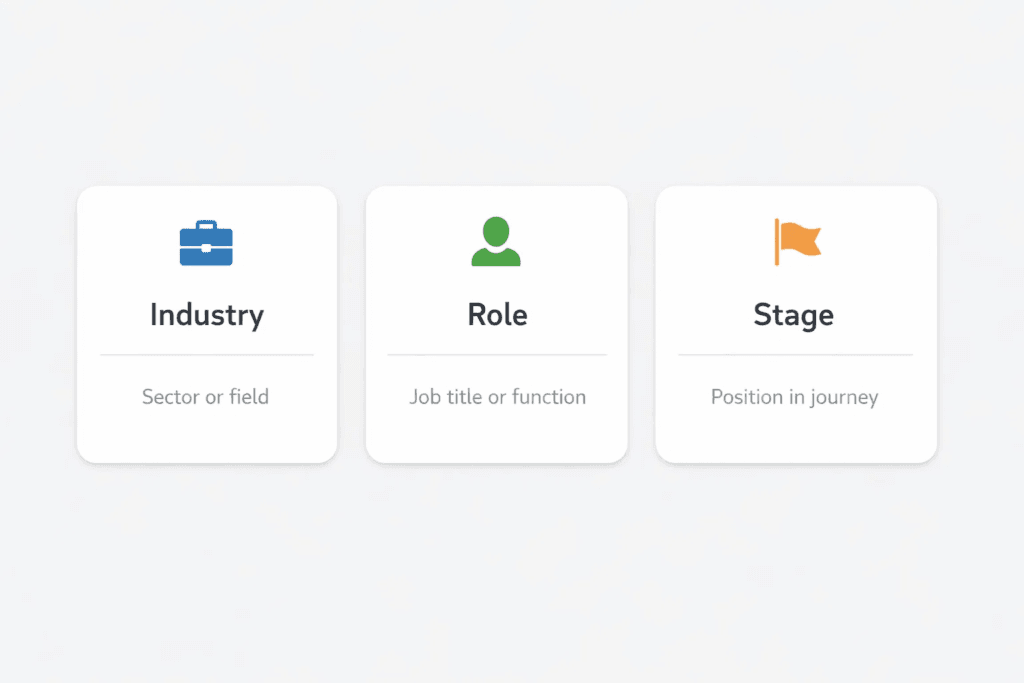
This is where most teams stay vague, and vagueness kills conversions.
To attract the right ICP, you need specificity in three places:
- Who it is for. Industry, company size, role, and maturity.
- What problem they feel in their day? Not the abstract category, the real friction.
- What “done” looks like. The outcome they care about is faster cycle time, fewer errors, and more visibility.
The directive also emphasizes a customer-led approach, using real customer insights and segmentation rather than chasing keywords in the abstract.
A simple way to apply this is to build “ICP filters” into your content:
- Call out the context early: “If you run RevOps at a mid-market SaaS…”
- Mention constraints that only your ICP has: security review, multi-stakeholder approval, data migration, procurement timelines
- Use examples from their world: handoffs between Sales and CS, pipeline hygiene, attribution debates
You are not trying to exclude people for fun. You are trying to help the right people feel like you wrote it for them.
How Do I Show My Product Solves The Problem Without Writing A Sales Brochure?
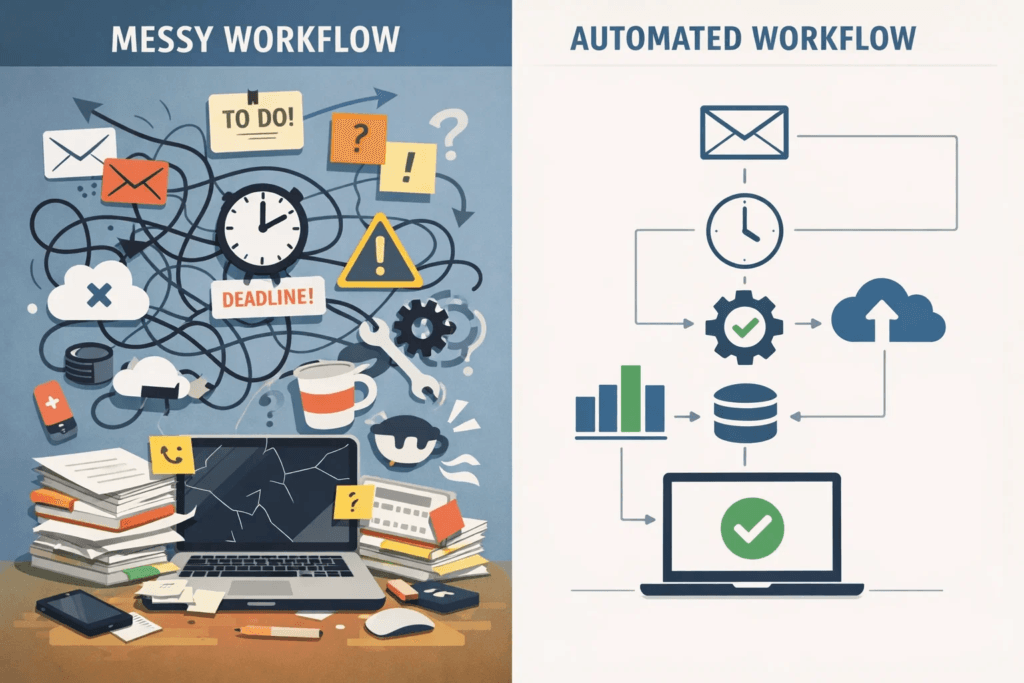
The secret is to stop describing features and start describing relief.
Defining core differentiators by answering: who it helps, what problems it solves, and why customers choose it over competitors, ideally by listening to sales and talking to real customers.
So instead of this:
“Our platform has automated routing, customizable workflows, and advanced reporting.”
Do this:
“When leads bounce between spreadsheets and inboxes, response times slip and attribution turns into a fight. Automated routing with clear ownership cuts the lag, and reporting makes the handoff visible.”
Same product. Totally different impact.
Example: turning a feature into a conversion narrative
Feature: Role-based approvals
Boring copy: “Create approval workflows for requests.”
Conversion copy: “When every request needs five approvals, teams stop shipping and start chasing signatures. Role-based approvals keep governance, but remove the bottleneck by routing decisions to the right owner instantly.”
What Is “Voice Of Customer” And How Do I Actually Use It?
Voice of the customer is simple: use the words buyers already use.
pulling language from support tickets and sales calls, then mirroring that language in your copy. They also highlight mapping objections by stage, using sales input and battle cards.
Here is a practical workflow that does not require a giant research project:
- Pick one key persona (example: Head of Marketing Ops).
- Collect 10 to 20 snippets from:
- Demo call notes
- Sales emails
- Support tickets
- Reviews
- Tag each snippet as one of:
- Pain (what is frustrating)
- Fear (what could go wrong)
- Desired outcome (what they want)
- Objection (why they hesitate)
Then, when you write, use that language in:
- Your opening problem framing
- Your subheads
- Your examples
- Your CTA copy
If your reader says, “We keep losing track of follow-ups,” and your article says, “Optimize lifecycle engagement,” you have already lost them.
Which CTA Should I Use, And Where Should I Put It?
This is where a lot of B2B SaaS content breaks.
Think of a CTA as a “next step,” not a “close.”
Here is a table you can use as a starting point:
| Buyer Stage | What They Are Thinking | Content That Fits | Best Next Step CTA | What To Measure |
|---|---|---|---|---|
| Unaware | “Convince procurement and my boss.” | Problem framing, symptoms, benchmarks | Newsletter, diagnostic, checklist | Scroll depth, email opt ins |
| Problem aware | “Something feels off, not sure why.” | “I need to fix this.” | Template, audit, calculator | Lead magnet conversion rate |
| Solution aware | “What approaches exist?” | Comparison of methods, build vs buy | Webinar, case study, short guide | Assisted conversions |
| Product aware | “Which tool should I choose?” | Comparisons, alternatives, best for X | Demo, trial, pricing explainer | Demo or trial starts |
| Ready to buy | Scroll depth, email opt-ins | Security, ROI, implementation, proof | Demo plus ROI pack | Sales qualified leads |
Placement tip that usually wins
Do not hide your CTA only at the bottom. Many readers never reach it.
Add a relevant next step after the first meaningful insight, not after the last paragraph.
How Do I Structure Posts So They Rank And Convert?
The structure is not about writing style; it is about intent match.
If someone searches “best CRM tools,” they want a list, not a long explainer of what a CRM is. Matching structure to search intent is part of what makes the content work.
Use these structures as defaults:
- List post: best tools for a use case, including a clear decision framework
- How to guide: steps, pitfalls, and a “recommended stack” section
- Comparison: criteria first, then head-to-head, then best for whom
- Alternatives: why people leave, who each person fits, migration considerations
Also, do not rely on generic “research.” If you want conversion, you need expertise.
Interviewing internal subject matter experts, then having the writer turn that insight into an SEO friendly post.
That is how you get the details competitors cannot copy.
Should I Create New Content Or Optimize What I Already Have?
If you already have a library, start with optimization.
Here is a lightweight way to find quick wins:
- Pull pages with impressions but low clicks, or clicks but low conversions.
- Identify mismatches:
- Wrong CTA for the stage
- Weak differentiator story
- Missing objections
- Outdated examples
- Update the post, then resubmit for indexing and promote it again.
Also, remember content decays and needs refreshing as rankings drop.
New content matters, but optimization is usually the fastest route to better results.
How Do I Prove My Content Is Working?
If you only measure traffic, you will only optimize for traffic.
Many SaaS companies do not know what content is effective because conversion tracking is not set up, which leads to guessing.
At minimum, set up tracking for:
- Lead magnet downloads
- Newsletter signups
- Demo requests
- Trial starts
- Key product actions after trial start (if you can pass this back)
- Assisted conversions (content that appears in journeys that convert)
If you are selling to an enterprise, remember the buying cycle can be long, and the job of content is often to move the reader to the next step, not instantly create a customer.
That is why assisted metrics matter.
What Content Formats Convert Best For B2B SaaS Right Now?
If you only publish blog posts, you are leaving conversions on the table.
Blogs are great for discovery, but buyers usually need proof and a shortcut before they raise their hand. Mix formats based on what the reader needs next, not what is easiest to produce.
A strong starter mix looks like this:
A practical “how-to” post that ranks, paired with a downloadable template that saves time.
A comparison page that answers “which tool,” paired with a short case study that proves it.
A pricing or implementation explainer, paired with an ROI calculator or simple checklist.
The win here is momentum. The reader gets value fast, then you offer the next step that feels like a natural continuation, not a hard sell.
How Do I Write Case Studies That Do Not Sound Fake?
Image suggestion: A one-page case study layout on a laptop, showing a before-and-after workflow diagram, with no readable text.
Most case studies fail because they start with the company, not the struggle.
Buyers do not care that “Acme scaled fast.” They care about whether Acme had the same messy reality they have today.
A converting case study usually follows this flow:
The situation in plain language. What was broken, and what did it cost them?
The constraints. Why could they not solve it with more people or another tool?
The turning point. What they changed, and why your approach was different.
The measurable outcome. Numbers are great, but even operational wins matter, like fewer handoffs or faster time to launch.
The lesson. One practical takeaway the reader can steal, even if they never buy.
Keep it specific, and keep it human. Include the tradeoffs, the hiccups, and what surprised them. That is what makes it believable.
What Should My Distribution Plan Look Like After Publishing?
Publishing is step one. Distribution is where conversions are made.
A simple plan that works for most B2B teams:
Day 1: Email it to your list with a short intro and one clear next step.
Day 2: Post a LinkedIn insight pulled from the article, then link in the comments or in a follow-up post.
Day 3: Send it to Sales and CS with a one-line note: “Use this when prospects ask X.”
Day 7: Repurpose it into a short “mistakes to avoid” post, and point back to the original.
The goal is not “more impressions.” The goal is to put the piece in front of people who are already in conversations that look like revenue.
How Do I Repurpose One Piece Into Five Without Lowering Quality?
Repurposing works when you keep the core idea intact and change the angle, not when you chop paragraphs into random snippets.
Here is a clean repurpose stack:
Turn the main post into a checklist.
Turn the checklist into a short landing page that captures email.
Turn one section into a “myth vs reality” LinkedIn post.
Turn another section into a quick loom-style walkthrough for prospects.
Turn the objections section into a short FAQ for your product page.
One quick example:
If your article is “How to Reduce Lead Routing Chaos,” your repurposed assets can target the same buyer with different entry points, like templates for Ops, proof for leadership, and FAQs for procurement.
That is how one strong piece becomes a mini funnel, not just more content.
How Do We Build A Repeatable B2B SaaS Content Process That Keeps Improving?
A conversion-focused content engine is not “publish and pray.”
It is a loop:
- Research: map high intent keywords, define differentiators, and collect voice of customer language
- Create: use SME input, match intent structure, build a clear commercial narrative
- Convert: pick the right CTA for the stage, place it where people will actually see it
- Improve: measure what converts, refresh decaying pages, update messaging that resonates
One more reality check: even the best content struggles if the rest of the buyer journey is full of friction.
So, yes, make the content better, but also ensure that the next step is worth taking.